
PeaBoost and Pea4Ever at ILS5: protein pea at the heart of international scientific exchanges
June 12, 2026
read article Contact

Since 2026, part of the Pea4Ever program's evaluations has been taking place more than 2,000 kilometers from French plots, on UM6P's PHENO-MA platform in Ben Guerir. This choice addresses a clearly identified constraint: to breed peas that are more resistant to drought, you first have to be able to measure precisely how each genotype responds to a lack of water.
Protein pea is particularly sensitive to water deficits occurring at flowering and during grain filling. It is at this stage that a large share of the yield is determined, and it is also during this period that drought and heat episodes have become more frequent in recent years.
Improving the climate resilience of the species is one of the six areas of the Pea4Ever program. But before breeding on this criterion is possible, the corresponding evaluation capacities must be available. This is precisely the purpose of the program's start-up phase: building the protocols, the facilities and the datasets that will make breeding possible.
In France, running a drought trial remains difficult: a single unexpected rainfall at the wrong moment is enough to erase the contrast between the treatments tested, and conditions vary widely from one year to the next. The result is hard to reproduce.
The semi-arid climate of Ben Guerir offers the opposite: over the growing period, the water supplied to the plants is very largely the water decided by the experimenter. It then becomes possible to impose a calibrated water deficit, at the intended stage, and to compare genotypes with one another under controlled and repeatable conditions.
The PHENO-MA platform is based on a lysimetric system, that is, a setup in which each plant or group of plants is grown in a container that is weighed continuously. Every variation in weight reflects the amount of water consumed.
This measurement is decisive. It makes it possible to go beyond simply observing a degraded yield and to reach the underlying mechanisms: how much water the plant used, at what point, and how efficiently it converted that water into biomass and then into grain. No conventional field trial gives access to this level of detail.


Alongside water measurement comes high-throughput phenotyping, that is, the automated and repeated characterization of plant behavior throughout the cycle, using imaging. This monitoring makes it possible to observe the dynamics of each genotype in fine detail: speed of ground cover, senescence, response to stress from day to day.
The analysis of these images is handled by Hiphen, a partner of the program, which already carries out trait extraction for the UM6P platform. This continuity between the Moroccan facility and the other phenotyping work of Pea4Ever is a real operational advantage.
Florian Barthès traveled to the site in late April 2026 to follow the progress of the ongoing trial, which aims to identify the spring pea profiles best suited to water stress conditions during flowering.
The evaluations conducted in Morocco do not replace the French trials: they complement them. In parallel, the program is building an experimental platform on shallow soil with Terres Inovia, on a precisely characterized plot, and will draw on INRAE's 4PMI platform.
Each facility answers a different question. The Moroccan lysimeters bring precision of measurement and control of the stress. The shallow-soil platform brings French agronomic reality. INRAE's facilities allow the mechanisms to be studied under controlled conditions.
Together they converge towards a single objective: implementing in pea a physiological breeding approach, that is, breeding based on understanding the physiological mechanisms of the response to stress. This approach has proven its worth in wheat, improving both yield potential and resilience to heat and water stress. It largely remains to be built for pea and, more broadly, for legumes.
The evaluations continue in 2026 and 2027 on the parents of the program's crosses. The lessons drawn from them will guide future breeding choices and feed into the work planned in Pea4Ever's subsequent projects, in particular a PhD thesis devoted to this approach.
This is not yet about varieties, but about the ability to select them tomorrow on a criterion that until now has largely escaped the available tools. It is an essential lever for the future of pea cultivation and, with it, for French and European protein autonomy.
June 12, 2026
read article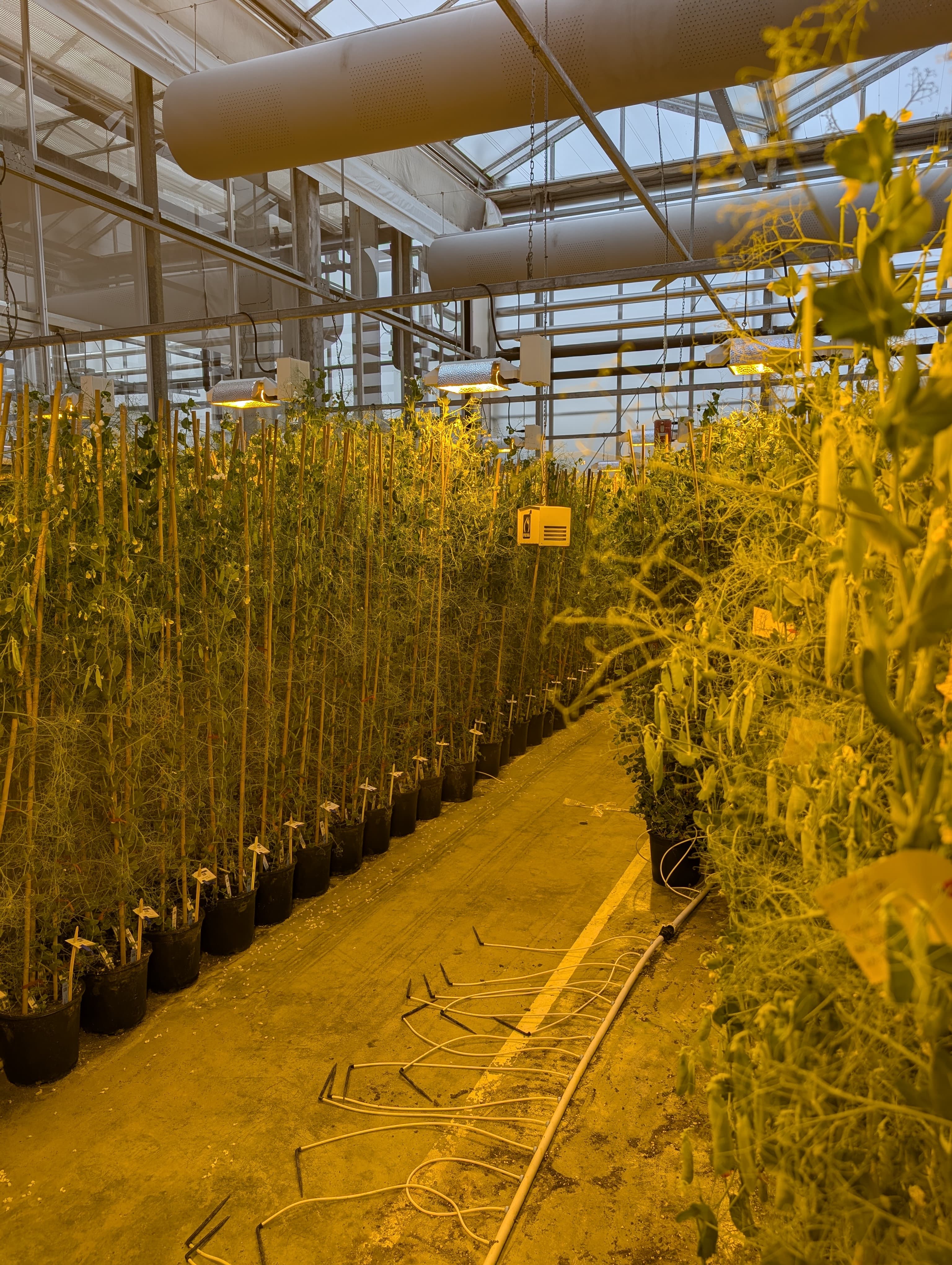
February 9, 2026
read article